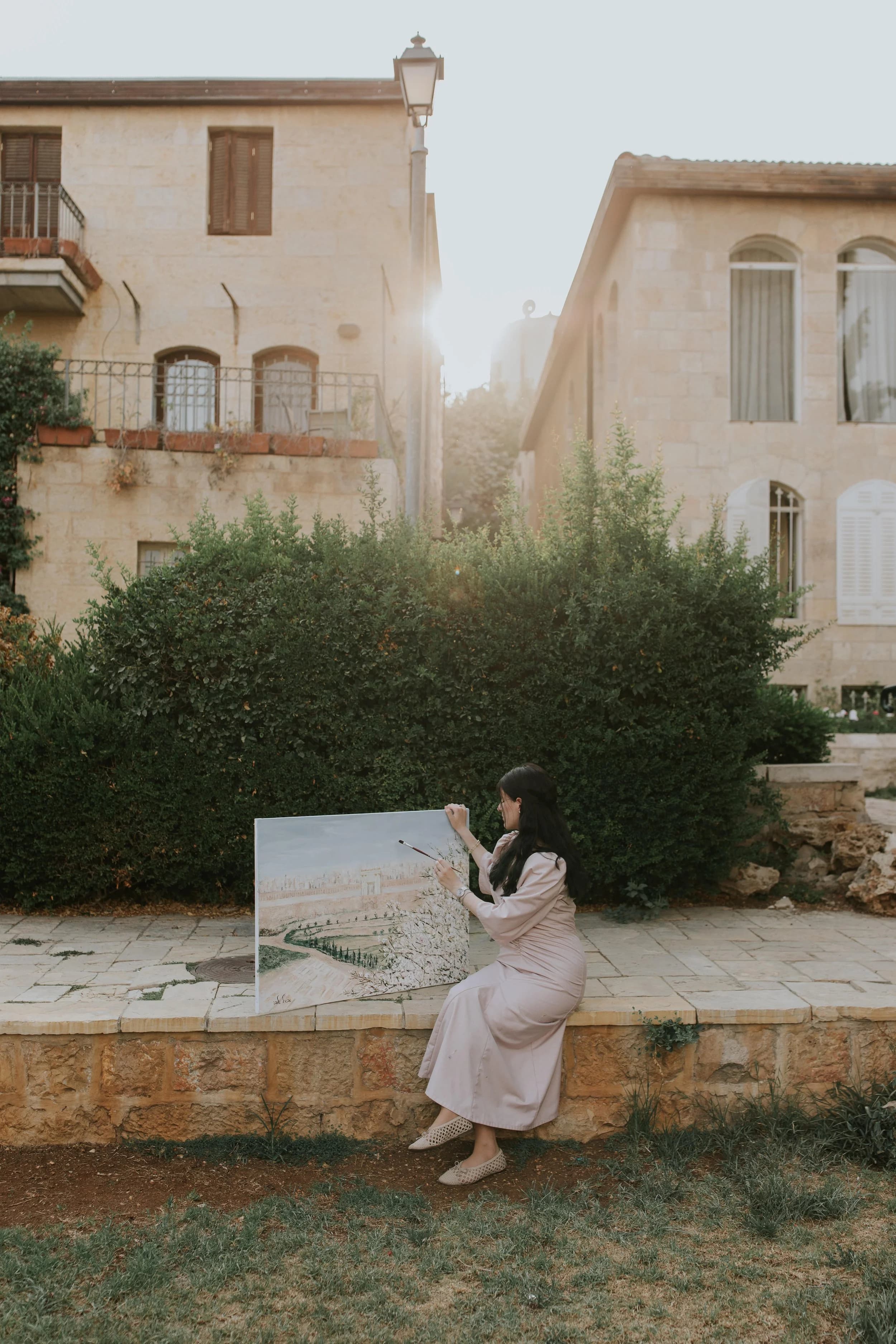
I am going to let you in on a secret: my studio is not the pristine, perfectly-lit space you might imagine. There is paint on the floor. There are half-finished cups of coffee on every surface. My brushes are organized in a system that only makes sense to me. And honestly? I would not have it any other way.
People always ask me about my process, so I thought I would walk you through what a day in the studio actually looks like.
Most mornings, I do not jump straight into painting. I need to ease into it. I will look at whatever I worked on the day before with fresh eyes. Sometimes I love it. Sometimes I see exactly what needs to change. That first look in the morning is usually the most honest one.
When I am working on an oil painting, I start with the composition and the large shapes. I work in layers, building up texture and depth. Oil paint is forgiving in a way that I love — you can rework, blend, scrape back, and try again. A painting might go through five or six different versions before it settles into what it wants to be.
The texture is important to me. I use palette knives and heavy brushstrokes because I want you to feel the painting, not just see it. When light hits a textured surface, it changes throughout the day. A painting in your living room will look different in the morning light than it does by candlelight on Shabbos. I love that.
And then there is the gold leaf. This is probably my favorite part of the process, and also the most unpredictable. Gold leaf is incredibly thin — thinner than a human hair — and it does not always go where you want it to. You have to work with it, not against it. I lay down adhesive, wait for exactly the right moment of tackiness, and then carefully apply the leaf.
Sometimes it crinkles in unexpected ways and catches the light from a new angle. Those happy accidents often become the best parts of the piece. There is a lesson in that, I think — about letting go of control and letting something beautiful emerge.
Watercolor days are completely different. Watercolor demands confidence because you cannot really go back. Each stroke is a decision. I love the way water moves pigment around the paper in ways I could not plan. The softness and transparency of watercolor captures a different kind of light than oils — it is gentler, more delicate.
By the end of a good studio day, I am usually covered in paint and deeply satisfied. And by the end of a hard studio day, I am covered in paint and wondering why I thought I could paint at all. Both days are part of the process. Both are necessary.
If you ever want to see more of the day-to-day, I share behind-the-scenes moments on my Instagram. It is the unfiltered version of studio life — the beautiful mess of making art.
Interested in bringing a piece home?